
How Fermented Foods Shape Daily Mood: A Plate-First Guide to the Gut-Brain Axis
Why Your Morning Mood Often Starts at the Breakfast Table
A calm morning does not need a clinical routine or a cupboard full of powders. It can begin with the gentle clink of a spoon against a bowl, the fresh sharpness of berries, and a breakfast that feels satisfying rather than prescribed. Food affects more than hunger. Its flavour, texture, aroma and ability to keep energy steady can shape how comfortably the morning unfolds.
Behind that everyday experience is a busy communication network between the digestive tract and the brain. The gut contains its own extensive nervous system, responds to stress, and exchanges signals with the brain through nerves, hormones, immune messengers and compounds produced by intestinal microbes. This gut-brain axis does not determine mood on its own, but it helps explain why digestion, appetite, stress and emotional steadiness often seem to travel together.
Fermented foods offer a welcoming way to support this relationship. A spoonful of cultured kefir, a little traditional kimchi or a savoury swirl of miso can bring acidity, depth and contrast to familiar meals without turning the table into a restrictive wellness project. For Australian kitchens, the approach is refreshingly practical: use what fits the fridge, begin with modest portions, and let living foods complement a broad diet rich in vegetables, legumes, whole grains, nuts, seeds and other nourishing staples.

How the Gut and Brain Talk to Each Other
The vagus nerve is one of the main communication routes linking the digestive tract with the brain. It carries sensory information upwards, including signals related to fullness, gut activity and internal conditions, while the brain sends signals back that can alter digestion and intestinal movement. This two-way traffic helps explain why a demanding day can produce a tight stomach, altered appetite or unsettled digestion, and why digestive discomfort can in turn affect concentration and emotional comfort.
The enteric nervous system adds another layer. With more than 500 million neurons, it can coordinate many digestive processes locally, which is why it is sometimes called a “second brain”. Gut microbes also contribute chemical messages, including metabolites that can influence immune activity, intestinal barrier function and neural signalling. Serotonin is produced extensively in the gut, although gut-produced serotonin is not the same as serotonin activity in the brain and should not be treated as a simple mood supplement.
Microbial diversity may help the body respond to physical stress in a more balanced way, particularly when supported by fibre-rich foods and an overall varied eating pattern. Research describes several overlapping pathways:
- Neural signalling: the vagus nerve and enteric nervous system carry information between the gut and brain.
- Metabolic signalling: microbial compounds such as short-chain fatty acids can influence intestinal, immune and nervous-system activity.
- Immune signalling: the gut lining and immune system respond to microbial changes and inflammation.
- Stress regulation: gut signals interact with the hypothalamic-pituitary-adrenal axis, one of the body”s major stress-response systems.
A detailed review in The Gut-Brain Axis: Influence of Microbiota on Mood and Mental Health describes this communication as bidirectional rather than one-way. That distinction matters. Fermented food is not a guaranteed treatment for anxiety or depression, and human evidence remains developing. It is better understood as one flavourful part of a dietary pattern that supports digestive function, variety and regular nourishment. The broader concept is also outlined in this overview of the gut-brain axis.
The Fermentation Pantry and What Makes It Tick
Fermentation is a form of food preparation in which microorganisms transform ingredients over time. In many vegetable ferments, lactic acid bacteria use available carbohydrates and produce acids that create the familiar tang, help preserve the food and change its aroma and texture. The result is not simply “healthy food” in the abstract. It is a culinary transformation that can make cabbage crisp and bright, milk creamy and gently tart, soybeans deeply savoury, and vegetables more complex.
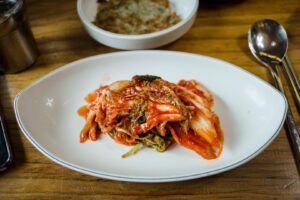
Useful pantry and fridge choices include milk kefir, unpasteurised sauerkraut, traditional kimchi and miso. They are not interchangeable. Kefir is a cultured drink that works naturally with oats or fruit; kraut brings a clean, crunchy acidity; kimchi contributes chilli, garlic and fermentation depth; miso provides umami in broths, dressings and glazes. Fermentation can alter food constituents and may improve the availability or activity of certain nutrients and plant compounds, but the effect depends on the food, culture, processing and storage conditions.
| Food | Typical character | Practical serving idea |
|---|---|---|
| Milk kefir | Creamy, tart and pourable | Stir through oats or serve with berries and chia |
| Unpasteurised kraut | Crunchy, salty and bright | Add a small forkful to eggs, grain bowls or toast |
| Traditional kimchi | Spicy, garlicky and savoury | Tuck into a toasted sandwich or serve beside rice |
| Miso | Deeply savoury and rounded | Whisk into warm broth or a vegetable glaze |
Shopping labels deserve a little attention. A product may be fermented but later pasteurised, which can reduce or remove live cultures while leaving its flavour and nutritional value. That does not make it useless, but it means it should not be described as a source of live microbes. Refrigerated products that state “live cultures” or “unpasteurised”, where appropriate and legally permitted, are more likely to retain active cultures. Miso varies too, so follow storage instructions and avoid boiling it when the aim is to preserve living cultures.
The potential mental-health relevance of fermented foods is promising, not settled. Research reviews discuss possible effects through microbial metabolites, inflammation, oxidative stress and the intestinal barrier, while also stressing that whole dietary patterns matter more than a single celebrated ingredient. A useful explanation of this emerging field appears in research on fermented foods and mental health, where plausible mechanisms are presented alongside the need for stronger human evidence.
Simple Ways to Build Living Foods into Everyday Meals
The most reliable approach is to attach a fermented food to a meal already happening. Breakfast is especially easy because kefir can take the place of some milk or yoghurt in a familiar bowl. Combine it with toasted rolled oats, berries and chia seeds for creamy texture, gentle acidity and a little crunch. If a colder breakfast is not appealing, use kefir as a small topping rather than the main ingredient, or keep the oats warm and add the kefir once the bowl has cooled slightly.
At lunchtime, fermented foods can work like a café condiment. A spoonful of crisp kraut cuts through the richness of poached eggs and avocado on toast. Kimchi tucked into a toasted sourdough sandwich brings heat and acidity to cheese, tofu, chicken or roasted vegetables. The portion need not dominate the plate. Its role is similar to pickles, mustard or a squeeze of lemon: a small, high-impact detail that makes the rest of the meal more satisfying.
Evening meals benefit from the rounded savouriness of miso. Whisk aged white miso into warm vegetable broth, stir it through a dressing, or brush a thin glaze over roasted carrots, pumpkin or eggplant. For a living-culture preparation, mix miso into liquid that is warm rather than bubbling hot, preferably just before serving. Fermented foods also sit best within a wider pattern of fibre-rich ingredients, because many gut microbes use plant fibres as fuel.
- Breakfast: kefir with oats, berries, chia and a few toasted nuts.
- Lunch: kraut with eggs, beans or a grain bowl, or kimchi in a toasted sourdough sandwich.
- Afternoon: a small miso dressing with cucumber, edamame or leftover roast vegetables.
- Dinner: a warm miso broth alongside greens, mushrooms, noodles or grilled fish.
Keep expectations sensible. A prospective study of medical students under examination stress found no association between fermented-food intake and cognitive performance, and its observational mood findings could not establish cause and effect. That is a useful reminder that fermented foods are not a shortcut to guaranteed focus or happiness. Their strongest practical value may be that they make balanced meals more appealing, varied and enjoyable, which helps healthy eating become easier to maintain.
Gentle Steps for Introducing Live Cultures without Upsetting Your System
More is not automatically better. Fermented foods can be salty, spicy, acidic or rich in fermentable carbohydrates, and a sudden large serving may produce bloating, gas or changes in bowel habits. Begin with roughly one tablespoon of a vegetable ferment, or a small splash of kefir, alongside a meal. Allow several days to notice how the body responds before increasing the amount or adding another fermented food.
Some temporary digestive sensations can occur while a person adjusts to a new ingredient, but persistent or intense symptoms deserve attention. Pain, ongoing diarrhoea, vomiting, hives, swelling, wheezing or other signs of an allergic reaction are not matters to simply push through. People with significant gastrointestinal conditions, compromised immunity, medically diagnosed food intolerances or pregnancy-related dietary concerns should seek individual guidance from a qualified health professional. Fermented foods also vary in histamine and other compounds, so personal tolerance matters.
A steady four-stage roadmap keeps the process comfortable:
- Week one: choose one product and add a tablespoon or less to one meal several times across the week.
- Week two: continue the tolerated food and use it in a different meal, such as kefir at breakfast and kraut at lunch only if both are comfortable.
- Week three: introduce a second style of fermentation in a modest portion, keeping the first food at a familiar amount.
- Week four: settle into two or three favourites, rotating them with plenty of vegetables, whole grains, legumes, nuts and seeds.
Keep a practical eye on the label. Check refrigeration requirements, use-by dates, salt levels and whether the product has been pasteurised after fermentation. Home fermentation requires careful hygiene and reliable instructions, particularly for vegetables and dairy. A commercial product from a reputable supplier is a perfectly sensible starting point. The goal is not to create a complicated project, but to make a few flavourful foods easy to reach for during an ordinary Australian week.
Stress management belongs in the same conversation. Eating slowly, sitting down for a meal and allowing a few quiet breaths before rushing into the next task can support comfort independently of any particular microbe. The gut-brain axis is shaped by sleep, movement, stress, medication, illness and the whole diet, so fermented foods work best as one modest, enjoyable piece of a broader routine.
Bring Calm and Vitality to Your Daily Plate
Fermented foods offer a simple way to add contrast and character to meals while supporting the variety of a plant-rich, nourishing eating pattern. Kefir can soften a breakfast bowl, kraut can sharpen eggs or grains, kimchi can wake up a sandwich, and miso can give a weeknight broth the depth of a well-run café kitchen. These foods may interact with the gut-brain axis through microbial, metabolic and immune pathways, but they should be valued for what is known and enjoyed, not sold as a cure-all.
Let the next grocery trip be pleasantly uncomplicated. Choose one fermented staple that suits the existing menu, start with a small portion, and pay attention to flavour as well as comfort. A spoonful of living food added consistently to a satisfying meal can be a gentle act of daily care, bringing more texture, nourishment and poise to the table without restrictive rules.